
Quick answer
Home insurance is one of those bills that can feel like it rises even when nothing changes. If you are juggling a mortgage, property taxes, and everyday expenses, it is normal to want the “cheap” option.
The catch is that “cheap” can mean two very different things. Sometimes it means you found a better price for the same protection. Other times it means you accidentally stripped out coverage you will wish you had the first time a basement leak or windstorm hits.
Cheaper home insurance in Canada usually comes from three moves: compare multiple quotes for the same coverage, use high-value discounts like bundling and risk-reducing upgrades, and choose a deductible you can truly afford. Keep coverage right-sized to rebuild cost and your belongings. Cutting the wrong protection can backfire at claim time. Review your policy every year, especially after renovations or major price changes.
This guide helps Canadian homeowners save money the smart way. You will learn how to compare quotes properly, which discounts matter most, and how to lower risk in ways insurers often reward. You will also learn the common traps that cause people to pay more later, like being underinsured or choosing a deductible that is unrealistic.
Quick start: pick your path
- My premium jumped at renewal
- Go to: How to compare quotes, Common mistakes
- I want affordable home insurance tips without cutting coverage
- Go to: High-impact savings strategies
- I am unsure whether I have broad vs comprehensive
- Go to: Which coverage type is best for the money
- I had a claim or worry about claims
- Go to: Claims strategy, FAQ
- I am closing on a new mortgage
- Go to: Roadmap, Homebuyer closing checklist
What does “cheap home insurance” really mean in Canada?
Cheap home insurance means a lower premium for a policy that still protects your home and finances properly. The safest way to get cheaper coverage is to compare quotes for the same limits and key endorsements, then use discounts and risk-reduction steps insurers recognize. Cutting essential coverage can create expensive gaps later.
Definition precision (quotable)
- Premium: the price you pay for coverage, monthly or annually.
- Deductible: what you pay out of pocket on a claim before the insurer pays the rest.
- Replacement cost coverage: a settlement basis that aims to repair or rebuild without deducting depreciation, subject to policy conditions.
Best practice: Use government and industry guidance to shop smart, then confirm specifics with your insurer or broker.
How to compare home insurance quotes in Canada the right way
Compare quotes using the same coverage. Match the dwelling limit (rebuild cost), deductible, liability limit, and key endorsements, especially water damage. Ask what is excluded and how claims are settled. Shopping around and comparing prices is one of the most reliable ways to reduce premiums without creating gaps.
What to line up before you compare
Copy and paste this checklist:
- Dwelling limit (rebuild cost, not market price)
- Contents limit (your belongings)
- Liability limit (commonly $1M or $2M, varies by insurer)
- Deductible (same dollar amount across quotes)
- Water damage coverage and endorsements (often the biggest hidden difference)
- Additional living expenses (if you cannot live in the home after a loss)
- Special limits for valuables (jewelry, bikes, collectibles)
Why this matters
If one quote is cheaper because it removed a key endorsement or raised the deductible, it is not a fair comparison. “Cheap” should mean better value, not weaker protection.
Best ways to reduce home insurance premiums in Canada
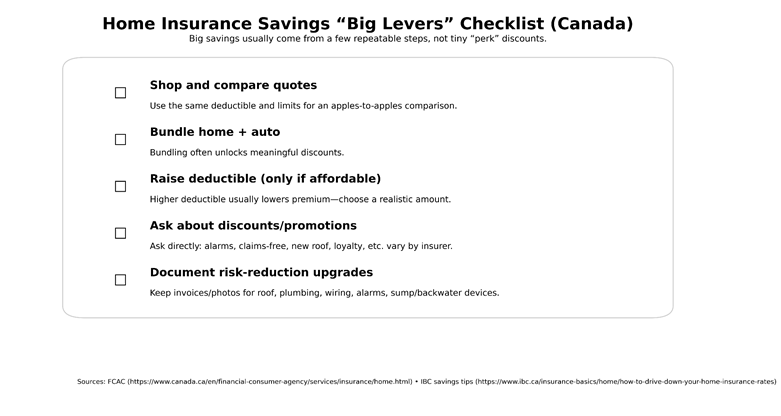
The most effective ways to reduce premiums are to shop around, bundle home and auto, raise your deductible only if you can afford it, and reduce claim risk through upgrades like alarms or plumbing and roof improvements. Ask specifically about discounts and provide proof of upgrades when possible.
High-impact savings strategies
1) Bundle home and auto
Bundling is one of the most common discounts. Ask your auto insurer for a home quote and ask your home insurer about a multi-policy discount.
2) Increase your deductible, carefully
Higher deductibles often lower premiums. Only do this if you can comfortably pay the deductible after a loss.
Deductible reality check: If raising the deductible would force you into credit card debt after a claim, it is not a savings strategy. It is a stress strategy.
3) Reduce risk in ways insurers can verify
Many insurers price based on measurable risk reduction, such as:
- monitored alarm systems,
- updated wiring or plumbing,
- roof replacement or documented roof age,
- sump pump or backwater valve (availability varies).
Keep invoices, permits, and receipts. Proof often matters.
4) Ask about discounts, explicitly
Do not assume discounts are automatic. Ask about:
- claims-free discounts,
- new roof discounts,
- security system discounts,
- non-smoker discounts,
- loyalty discounts,
- condo versus detached rating differences.
5) Review how you pay
Some insurers price differently for annual vs monthly payments. Ask whether paying annually changes the total cost.
Which home insurance coverage type gives the best value?
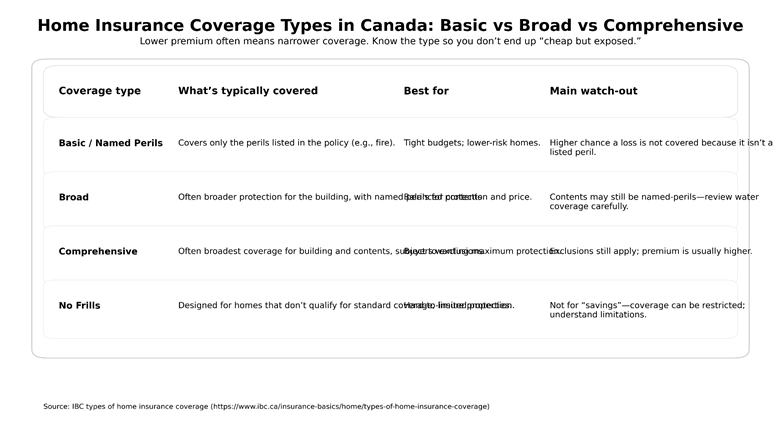
Value depends on how much protection you need and what you can afford to pay out of pocket. In Canada, insurers commonly offer basic (named perils), broad, and comprehensive coverage. Broad and comprehensive can reduce the risk of a claim being denied because a peril is not listed, but exclusions still apply.
Quick definitions
- Basic or named perils: Covers only the perils listed.
- Broad: Often broader coverage on the building with named-perils coverage on contents.
- Comprehensive: Often broader coverage on building and contents, still subject to exclusions.
- No frills: Offered by some insurers for properties that do not meet normal underwriting standards.
Comparison table (easy to extract)
| Feature | Basic (Named Perils) | Broad | Comprehensive |
| How coverage is triggered | Named perils only | Often broader on building | Often broader on building and contents |
| Best for | Tight budgets and lower risk homes | Balanced protection | Highest protection expectation |
| Risk of denial from “not listed” peril | Higher | Medium | Lower (exclusions still apply) |
| Often costs | Lowest | Mid | Higher |
Tip: “Comprehensive” does not mean “covers everything.” Water damage and maintenance-related exclusions are where surprises often live.
How claims can affect your home insurance cost
Claims history can affect eligibility and pricing because insurers price based on expected future losses. A pattern of small claims can sometimes cost more long-term than paying out of pocket once. Use insurance for losses that would genuinely strain your finances, especially large losses and liability.
A practical claims strategy
- If the repair cost is close to your deductible, consider paying yourself.
- If it is a large loss or liability issue, insurance is exactly what it is for.
- Ask: “If I make this claim, how could it affect renewal or future premiums?” You may not get a guaranteed answer, but ask anyway.
Step-by-step roadmap to lower home insurance costs
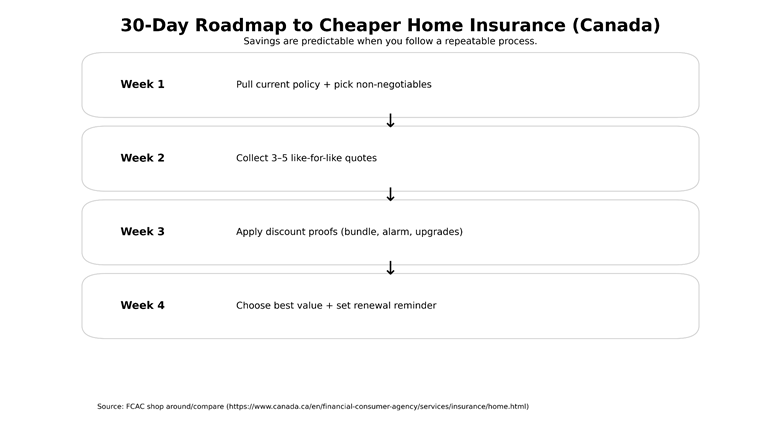
Lowering home insurance costs works best as a structured process. Confirm rebuild value and must-have endorsements, collect quotes using the same deductible and limits, apply the biggest discounts (bundle, deductible, risk upgrades), and review annually. Shopping around and comparing quotes is a strong first step.
Do this over the next 30 days
- Gather your current policy
- Declarations page, deductible, endorsements, limits
- Decide your non-negotiables
- Example: water damage endorsement, liability limit, replacement cost basis (if available)
- Get 3 to 5 quotes
- Use the same limits and deductible for a fair comparison
- Ask for discount verification
- Bundle eligibility, alarm certification, roof or plumbing updates
- Pick the best value, not the lowest premium
- The cheapest policy is not cheap if it excludes the risk you are most likely to face
- Set a renewal reminder
- Review annually and after major changes (renovations, roof, rental suite)
Common mistakes Canadians make when trying to get cheaper home insurance
- Comparing quotes with different deductibles
- Insuring market value instead of rebuild cost
- Missing or misunderstanding water coverage
- Chasing discounts without documenting upgrades
- Filing small claims repeatedly
- Not updating the insurer after renovations
- Assuming comprehensive means covers everything
FAQ
How can I lower home insurance costs quickly in Canada?
Start with the biggest levers: compare quotes for the same coverage, ask about bundling, and raise your deductible only if you can comfortably cover it after a loss. Then look for discountable upgrades and make sure your policy is right-sized.
Are home insurance discounts Canada-wide or province-specific?
Many discounts exist across Canada, but availability and size vary by insurer and province. Some rating factors and underwriting rules can also vary by province. Ask your insurer which discounts apply to your postal code and property type.
Is raising my deductible one of the best ways to reduce premiums?
It can be, because you agree to pay more before the insurer pays. Choose a deductible you can realistically pay without financial strain.
Is broad or comprehensive home insurance cheaper?
Broad coverage often costs less than comprehensive because it may provide named-perils coverage for contents instead of broader protection. Comprehensive usually offers wider protection, but exclusions still apply.
Do security systems really reduce home insurance premiums?
Sometimes. Discounts vary widely and may require proof of installation or monitoring. Ask your insurer what qualifies before you buy equipment.
Should I switch insurers every year to get the cheapest quote?
Switching can save money if you are truly getting better value. Switching only to chase the lowest premium can lead to weaker coverage or missing endorsements. Shop annually and choose the best value for your needs.
How many quotes should I get for home insurance?
Aim for at least three quotes, and make sure each quote uses the same deductible and similar limits so the comparison is fair. More quotes can help if your home has unique risks or recent claims.
Does my mortgage lender require home insurance?
Many lenders require proof of home insurance before funding because the home is collateral. Requirements vary. Confirm with your lender and ensure coverage starts on closing day to avoid delays.
Closing: the key insight
“Cheap” home insurance is best achieved through smart comparison, high-value discounts, and risk reduction, not by stripping coverage. If you line up your quotes properly, choose a deductible you can afford, and match coverage to rebuild cost, you can often lower premiums without unpleasant surprises.
Reminder: This article is general information, not insurance advice. Coverage and discounts vary by insurer and province.
If you are buying a home or refinancing and want help budgeting for insurance so your monthly payment stays comfortable, speak with a mortgage professional. Insurance costs can materially affect affordability, and it is easier to plan early than to scramble before closing.
Sources and links used
- FCAC: Home insurance overview and shopping guidance (Canada.ca)
- Insurance Bureau of Canada: How to drive down home insurance rates
- Insurance Bureau of Canada: Types of home insurance coverage