

While everyone is busy debating whether tech stocks are on the verge of another bubble, a far more consequential story has been unfolding quietly across the country. It is one that hits much closer to home, quite literally. A multi-year Canadian housing correction has been taking shape beneath the surface, and most Canadians have barely felt the ground shifting under their feet.
If you have been waiting for home prices in 2025 to bounce back to the remarkable highs of early 2022, it may be time for a difficult reality check. The housing market that Canadians grew accustomed to, from fast-rising prices to bidding wars and instant equity, is gone. It has been replaced by a slower, heavier and far more complicated landscape.
This is not about panic. It is about clarity. Here is what the numbers reveal about Canada’s housing correction, why it runs deeper than many realize, and what it means for your financial future. Whether you own a home, hope to buy one, or were planning to rely on home equity in retirement, these trends matter.
The Numbers Don’t Lie: Home Prices Are Down Harder Than They Look
Home prices across Canada have been drifting downward since early 2022. On the surface, the drop looks like a manageable 20 percent decline from the peak. But when inflation is factored in, the very inflation that has quietly eroded buying power, the real correction is closer to 30 percent. That is not a soft landing, that is a genuine reset.
Economists across the major banks now share a common view. It may take five to ten years for national home prices to climb back to their 2022 highs. One BMO economist even suggested that real estate as a short-term investment is “pretty much dead for now.” It is dramatic language, but in context, not unfounded.
The era of effortless annual price gains and the automatic wealth effect that Canadians have relied on for decades, is over for the foreseeable future.
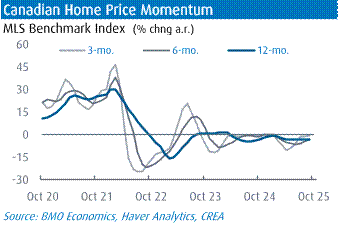
Source: BMO Economics
How We Got Here: A Perfect Storm That Couldn’t Last
.
To understand why the correction is unfolding the way it is, we need to revisit the extraordinary environment that led to the 2022 peak. From 2005 to 2022, the average Canadian home price more than tripled, eventually topping $816,720 nationwide. That level of appreciation is rare in any asset class and unprecedented in Canadian housing.
The surge was driven by a powerful combination of forces:
- Millennials reaching their peak buying years
- Record levels of immigration
- Pandemic-era relocations and lifestyle shifts
- Historically low interest rates
- Generous stimulus-driven liquidity
- A rush of real estate investors
- A widespread belief that real estate only goes up
Homes stopped being homes. They became leveraged investment vehicles. Buyers overbid. Investors expanded portfolios. Families stretched themselves thin. Many assumed that the rising tide of home equity would stay high forever.
It was unsustainable and made the current correction practically inevitable. The correction was not just predictable but unavoidable.
This Isn’t the First Time: Lessons from Past Housing Downturns
Canada’s current situation mirrors two notable housing downturns:
1. The U.S. housing crisis in 2008
Canada isn’t dealing with the mass foreclosures the U.S. experienced, but the depth and multi-year nature of the correction look similar.
2. Ontario’s housing crash in the 1990s
During the 1990s correction, prices dropped sharply and did not fully recover for more than a decade. Today’s data shows Canada tracking somewhere between these two patterns, slower and calmer than the U.S. collapse, but more prolonged than many Canadians expect.
This is why so many economists are calling the ongoing shift in the Canadian housing market a correction and not a temporary slowdown.
It’s Not All Bad News, Depending on Your Postal Code
Canada’s housing market is not a single market. It’s a patchwork.
Hot Spots Cooling Down
Toronto and Vancouver are the poster children of the boom, and they are also the hardest hit in the correction. Buyers are patient, sellers are realistic, and bidding wars are much rarer.
Markets Still Growing
On the other hand, the Prairies and parts of Atlantic Canada are experiencing healthy demand and even moderate appreciation. Local economies, affordability levels, and migration patterns all play a role.
When reading headlines, remember this: real estate forecast data in Canada varies widely by region. National averages never tell the full story.
Why This Correction Matters More Than Any Stock Market Dip
Housing is not just another investment. It is where Canadians store the largest share of their wealth.
Even after recent declines:
- Real estate still makes up over 41.8% of household assets
- At the peak it was 46%
- Meanwhile, stocks make up just 26%, highly concentrated among top earners
For middle-income Canadians, real estate is not just their biggest asset. It is often their only asset. A housing correction therefore hits harder than a stock market pullback. The impact is broader, deeper and far more personal.
The Retirement Crisis No One Wants to Talk About
Nearly half of unretired homeowners say they plan to fund their retirement by selling their home. One-third of Canadians say their home is their entire retirement plan. When home prices rose every year, that plan felt safe. With values still well below the peak and the recovery expected to be slow, that plan now carries more risk.
If you were counting on a large equity cushion, it may no longer be guaranteed. If your entire retirement strategy relies on rising home values, it may be wise to rethink the plan.
So What Should You Actually Do About This?
This is not all doom and gloom. But it is a call for a more grounded, realistic plan.
Here are a few smart steps that you can take.
1. Don’t count on a rapid rebound
History shows housing corrections take years, not months.
2. Diversify your financial life
If your home represents almost all your net worth, consider growing other investments, including RRSPs, TFSAs, or even safer income-producing assets.
3. Reconsider your selling timeline
If you don’t need to sell right away, patience may pay off. Selling in a declining market can lock in avoidable losses.
4. Think long-term if staying in your home
Daily price fluctuations matter far less if you’re not moving. Housing remains a solid long-term asset.
5. Explore your financing options strategically
This market is pushing more Canadians to consider:
- Mortgage refinancing options
- HELOCs
- Debt restructuring
- Bridge financing
- Investment-backed refinancing
Talking to a lending professional can help you understand what’s feasible in today’s rates and market conditions.
Pegasus Lending specializes in helping homeowners navigate complex markets like this one, when cash flow is tight or equity planning feels uncertain.
The Bottom Line
While tech stocks dominate the headlines, the real story shaping Canadians’ financial futures is the quiet housing correction already underway. Prices are down meaningfully, and the recovery could take a decade. For millions of Canadians who rely on home equity as their retirement plan, this shift deserves attention.
The Canadian housing market is not doomed. It will stabilize, as it always has. But the era of treating real estate as a guaranteed win is over for now. The smartest move today is simple and it calls for making decisions based on current reality instead of past momentum.
If you’re trying to buy, sell, refinance, or simply make sense of your options, Pegasus Lending is here to help you navigate today’s housing reality with clarity and confidence.
Looking for guidance or personalized financing solutions?
Explore your options at Pegasus Lending, where real advice meets real numbers.