
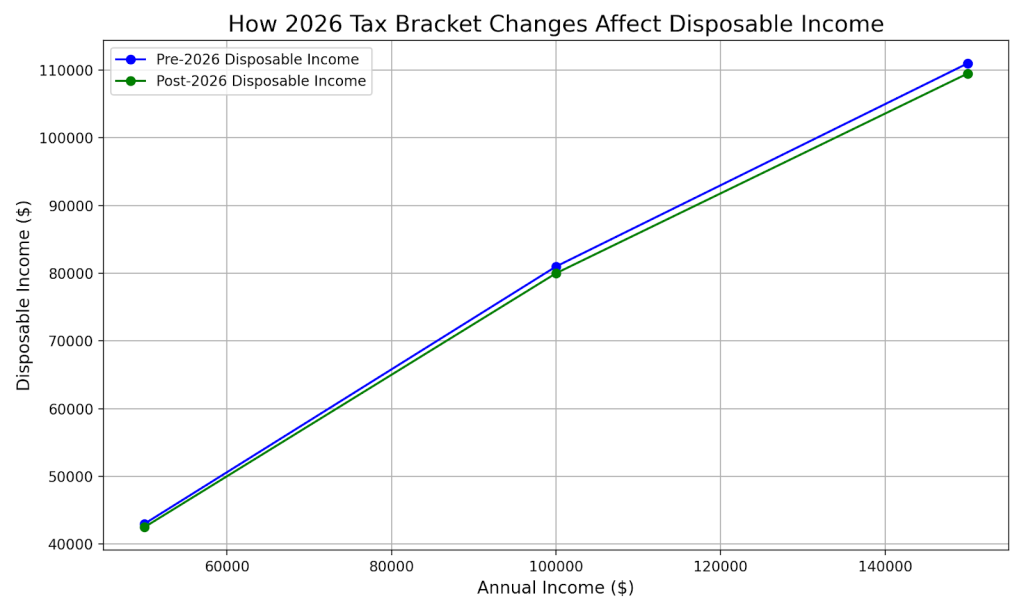
The new tax brackets in Canada for 2026 may affect homebuyers by slightly increasing their disposable income, particularly in lower tax brackets. This can provide more financial room to cover home-related expenses like down payments and closing costs. However, buyers in higher tax brackets may not see as significant an impact. Additionally, these changes, when combined with homebuying-specific taxes like land transfer tax and first-time homebuyer incentives, can help reduce upfront costs and improve purchasing power.
Buying a home in Canada is an exciting but costly endeavor. In 2026, changes to Canada’s income tax brackets will impact how much money you take home, and how much of that can be put toward your new home. But it’s not just about income tax—there are also other taxes to consider when buying a property, like land transfer tax, property tax, and closing costs. These costs can quickly add up, especially for first-time homebuyers. In this article, we’ll break down how the 2026 tax changes, along with other homebuying-related taxes, affect your ability to buy a home and what it means for your finances.
Quick Start: Pick Your Path
- First-time homebuyer: Learn about incentives, rebates, and tax changes.
- Curious about land transfer tax: Understand how it fits into your homebuying costs.
- Worried about closing costs: Find out how tax changes could help cover those expenses.
How Do Tax Brackets Work in Canada for 2026?
In 2026, Canada’s income tax brackets have shifted slightly to account for inflation. These changes will impact how much income homebuyers have available for saving, closing costs, and mortgage payments.
Tax brackets determine how much of your income is taxed at different rates. In 2026, tax brackets in Canada were adjusted slightly to reflect inflation. This means some homebuyers will see a reduction in the amount of tax they pay, allowing them to take home more of their income. For example, if you’re in the lower tax brackets, these changes might increase your disposable income, making it easier to afford your mortgage or save for a down payment.
What Is the Impact of Ontario’s 2026 Tax Brackets on Homebuyers?
Ontario’s 2026 tax brackets have adjusted for inflation, potentially giving homebuyers with higher incomes a slightly reduced provincial tax bill.
For Ontario residents, the provincial tax brackets for 2026 are now aligned with the country’s updated tax system. This means that those in higher tax brackets might see a slight reduction in their tax liabilities, leaving them with more disposable income. For homebuyers, this means you could have more money available for mortgage payments or to save for a down payment. First-time homebuyers in Ontario can also benefit from land transfer tax rebates, which could make a significant difference in the affordability of their purchase.
How Do Homebuying-Specific Taxes Like Land Transfer Tax Affect Your Purchase?
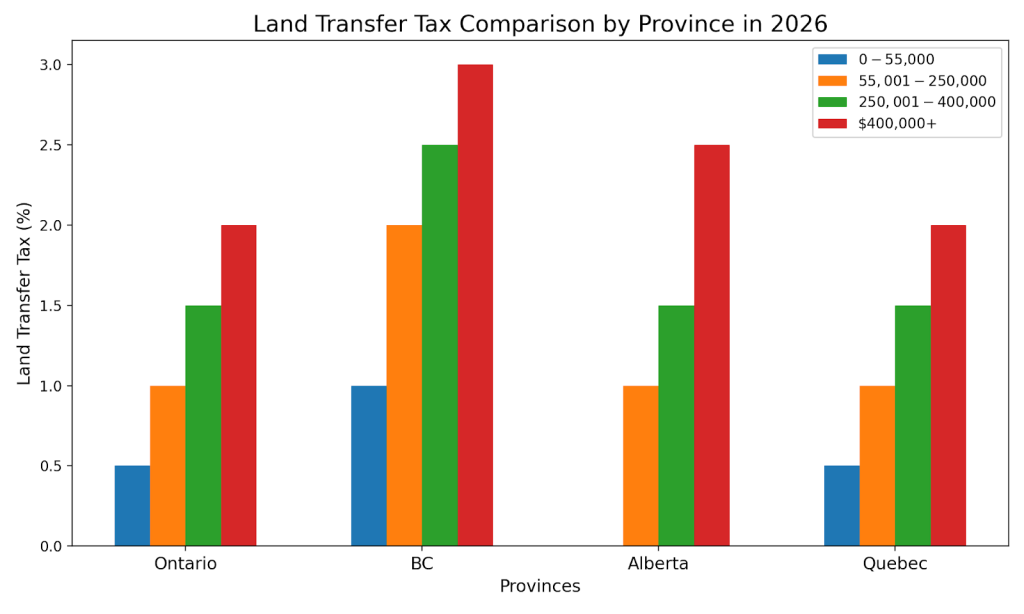
Land transfer tax is due when you purchase a property, and in Ontario, it varies depending on the home’s price. With tax changes in 2026, some buyers may see savings that could be put toward covering land transfer tax costs.
Ontario’s land transfer tax increases with the price of the property, but first-time homebuyers are eligible for rebates that reduce these costs. If you are in a higher income bracket and benefit from the tax savings in 2026, these savings can help offset some of the cost of land transfer tax. This is particularly important for buyers in Toronto, where land transfer taxes are higher. It’s essential to factor in both provincial and municipal land transfer taxes when budgeting for your home purchase.
What First-Time Homebuyer Incentives Are Available in 2026?
First-time homebuyers in Canada can take advantage of tax incentives such as the Home Buyers’ Plan (HBP) and rebates for land transfer taxes.
First-time homebuyers in 2026 can withdraw up to $35,000 from their RRSP under the Home Buyers’ Plan (HBP) to help with the down payment. This plan can be used by each person buying a home, meaning couples can withdraw up to $70,000. Additionally, Ontario offers land transfer tax rebates that can reduce the upfront costs of purchasing a home. These incentives, combined with the increased disposable income from tax bracket changes, make homeownership more affordable, especially for buyers in lower income brackets.
What Closing Costs Will You Need to Account For in 2026?
Closing costs include legal fees, home inspections, and land transfer taxes. The 2026 tax changes might help reduce the burden by freeing up more of your income.
Closing costs are the final expenses you need to pay when purchasing a home. These can include legal fees, property inspections, and the land transfer tax, which is a significant cost. The 2026 tax bracket changes may help first-time buyers save more money throughout the year, which can be used to cover these closing costs. In high‑value markets like Toronto, the land transfer tax can be substantial, and knowing how to budget for these expenses is crucial.
How Does the New Tax Structure Impact Your Ability to Qualify for a Mortgage?
The 2026 tax bracket changes may make it easier for some buyers to qualify for a mortgage by increasing their disposable income.
Lenders look at your income when determining how much you can borrow for a mortgage. By reducing the amount of income taxed, the 2026 changes could allow you to show more disposable income, improving your mortgage qualification. If you’ve been considering purchasing a home but have struggled with qualifying for a larger mortgage, these changes could make it easier for you to afford the home you want.
How Can You Prepare for Homebuying Taxes in 2026?
Understanding how tax bracket changes, land transfer taxes, and other incentives work can help you plan your home purchase more effectively.
Before purchasing a home in 2026, it’s essential to review your financial situation. Consider the impact of tax bracket changes, how much you could save with first-time homebuyer incentives, and the land transfer taxes you’ll need to pay. Starting early can help you budget for these expenses and give you a clearer picture of how much home you can afford. Working with a mortgage professional can help you plan and navigate these complexities.
Comparison Section: Homebuying Taxes and Incentives
| Tax Type | Impact of 2026 Changes | Who It Affects |
| Income Tax Brackets | Lower tax rates for some, higher for others | Homebuyers with higher incomes will see less disposable income |
| Land Transfer Tax | Rebates for first-time buyers still available | First-time homebuyers and people buying in high-value areas |
| Property Tax | No direct change, but more savings could free up funds | Ongoing costs for homeowners in 2026+ |
| First-Time Homebuyer Incentives | HBP and rebates remain accessible | First-time buyers looking to reduce upfront costs |
| Closing Costs | Tax changes may affect the amount buyers can save | All homebuyers, especially those in higher brackets |
Common Mistakes
- Underestimating closing costs: Many homebuyers forget to budget for legal fees, inspections, and land transfer taxes.
- Ignoring tax bracket changes when calculating mortgage qualification: Not accounting for the changes in your tax bracket could affect the loan amount you’re eligible for.
- Not planning for the long-term impact of property taxes: Property tax rates often increase with home values, and not preparing for this can cause financial strain.
- Skipping first-time homebuyer incentives: Some buyers miss out on valuable tax breaks and rebates due to lack of awareness.
- Not considering the full impact of income tax on mortgage payments: Tax savings can be reinvested to reduce monthly payments, but many buyers don’t factor this in.
FAQ Section
How do the new tax brackets affect my mortgage qualification in 2026?
Direct Answer: The changes may improve your mortgage eligibility by increasing your take-home pay.
Expanded Explanation: Mortgage lenders use your disposable income to determine how much you can afford, so tax bracket reductions could help you qualify for larger loans.
How much is land transfer tax in Ontario for 2026?
Direct Answer: In Ontario, land transfer tax varies depending on the purchase price, but first-time homebuyers may be eligible for a rebate.
Expanded Explanation: The first-time homebuyer rebate can significantly reduce this cost for qualifying buyers.
Can I claim any tax deductions as a first-time homebuyer?
Direct Answer: Yes, first-time buyers can take advantage of rebates, credits, and the Home Buyers’ Plan (HBP).
Expanded Explanation: The HBP allows you to withdraw from your RRSP to help with the down payment, and you may be eligible for a land transfer tax rebate.
What are the key closing costs I should expect in 2026?
Direct Answer: Closing costs typically include land transfer tax, legal fees, and home inspections.
Expanded Explanation: Tax bracket changes may help first-time buyers offset some of these costs.
How do property taxes affect my ability to afford a home?
Direct Answer: Higher property taxes can increase the overall cost of homeownership.
Expanded Explanation: Buyers need to consider ongoing property taxes, which can rise with the value of the property.
Closing Section
The tax bracket changes in 2026 offer opportunities for homebuyers to save, whether they’re a first-time buyer or someone looking to upgrade. Understanding the full range of taxes—income, property, land transfer, and closing costs—helps you budget effectively for your home purchase. If you need personalized guidance on how these changes affect your specific situation, speaking with a mortgage professional can help ensure you make the best financial decision.
Sources & References:
- Canada Revenue Agency (CRA) – Tax Bracket Changes for 2026
https://www.canada.ca/en/revenue-agency.html - Canada Mortgage and Housing Corporation (CMHC) – Land Transfer Tax and Rebates
https://www.cmhc-schl.gc.ca/ - Government of Ontario – Land Transfer Tax Refund for First-Time Homebuyers
https://www.ontario.ca/page/land-transfer-tax-refund-first-time-homebuyers - Canada Mortgage and Housing Corporation (CMHC) – First-Time Homebuyer Information
https://www.cmhc-schl.gc.ca/ - Ontario Corporate Income Tax Information – 2026 Rates
https://www.ontario.ca/document/corporations-tax/corporate-income-tax - Canada Revenue Agency – Corporation Tax Rates
https://www.canada.ca/en/revenue-agency/services/tax/businesses/topics/corporations/corporation-tax-rates.html - Canada Revenue Agency – Business Number and Program Accounts
https://www.canada.ca/en/revenue-agency/services/tax/businesses/topics/business-registration/business-number-program-account.html - Canada Revenue Agency – GST/HST Registration Requirements
https://www.canada.ca/en/revenue-agency/services/tax/businesses/topics/gst-hst-businesses/gst-hst-account/register-account.html - Canada Revenue Agency – Payroll Information
https://www.canada.ca/en/revenue-agency/services/tax/businesses/topics/payroll.html